
Empower Your Future with the Bachelor of Science in Computer Science Program at FUSST!
The BSCS program prepares students to become innovative problem solvers and technology leaders in a rapidly evolving digital world. Computer scientists are at the heart of modern progress — applying computational thinking to solve complex problems in science, engineering, healthcare, business, and countless other fields.
At FUSST, our BSCS graduates develop a solid foundation in programming, algorithms, data structures, mathematics, and communication. Through hands-on projects and collaborative learning, they gain the ability to design, develop, and deploy high-quality software systems that make a real-world impact.
With a focus on both technical expertise and professional skills, FUSST BSCS graduates are prepared to excel as software engineers, data scientists, researchers, and entrepreneurs — capable of driving innovation wherever technology meets human need.
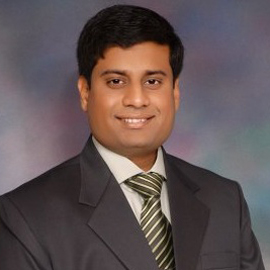
Program Manager
Foundation University School of Science and Technology
Graduates of the BS Computer Science program are equipped with the technical, analytical, and problem-solving skills required for a wide range of roles in the IT and software industry. Potential career paths include:
- Software Developer / Software Engineer
- Web Developer
- Mobile App Developer
- Full Stack Developer
- Data Analyst
- Data Scientist
- AI / Machine Learning Engineer
- Cybersecurity Analyst / Ethical Hacker
- Network Engineer
- System Administrator
- Database Administrator (DBA)
- UI/UX Designer
| Areas | Credit Hours | Courses |
|---|---|---|
| Computing Core | 46 | 14 |
| Domain Core | 18 | 6 |
| Domain Elective | 21 | 7 |
| Mathematics & Supporting Courses | 12 | 4 |
| Elective Supporting Courses | 3 | 1 |
| General Education Requirement | 34 | 15 |
| Internship | 3 | 1 |
| Total | 137 | 48 |
To download the Study Plan Computer Science program, click here.
Assessments
Students are assessed based on assignments, quizzes, projects, presentations, oral examinations, and written examinations. Students must maintain a cumulative GPA of 2.0 by the end of their degree. The distribution of marks is:
- Sessional (Assignments, Quizzes, Projects, and Presentations) = 25%
- Midterm Exam = 25%
- Final Term Exam = 50%
- At least 50% or above marks in the Intermediate (HSSC) or equivalent exam with either Mathematics as a subject or Pre-Medical as a discipline.
- Students of Intermediate (Pre-Medical) must pass deficiency courses of Mathematics of 6 credit hours within one year of their regular studies.
The BSCS program provides a comprehensive curriculum that covers key areas of computer science.
Core Modules:
- Programming Fundamentals
- Data Structures and Algorithms
- Database Systems
- Operating Systems
- Software Engineering
Specialized Courses:
- Artificial Intelligence
- Data Science
- Web and Mobile Application Development
- Cloud Computing
- Cybersecurity
Capstone Project:
Students apply their technical knowledge and problem-solving skills to a real-world computing or software development project.
Why Study Computer Science?
Studying Computer Science equips students with the skills to design innovative solutions, analyze complex problems, and drive technological progress across industries. It offers vast career opportunities in software development, artificial intelligence, cybersecurity, and data science, while fostering creativity, critical thinking, and adaptability. As technology continues to shape the future, a degree in Computer Science opens doors to global careers, entrepreneurship, and lifelong learning in an ever-evolving digital world.
Program Educational Objectives (PEOs)
| Objective | Description |
|---|---|
| PEO1 | Develop proficiency as computer scientists with an ability to solve a wide range of computational problems. |
| PEO2 | Display effective communication skills with the capacity of working individually and as a part of teams for management of software projects. |
| PEO3 | Exhibit high moral values and ethics along with life-long learning of technical skills and manifest socially responsible individuals. |
Program Learning Outcomes (PLOs)
| S# | Program Learning Outcomes (PLOs) | Computing Professional Graduate |
|---|---|---|
| 1 | Academic Education | To prepare graduates as computing professionals. |
| 2 | Knowledge for Solving Computing Problems | Apply knowledge of computing fundamentals, specialization, and mathematics, science, and domain knowledge to abstract and conceptualize computing models from defined problems and requirements. |
| 3 | Problem Analysis | Identify, formulate, research literature, and solve complex computing problems using fundamental principles of mathematics, computing sciences, and relevant domain disciplines. |
| 4 | Design / Development of Solutions | Design and evaluate solutions for complex computing problems, and design and evaluate systems, components, or processes that meet specified needs with appropriate consideration for public health and safety, cultural, societal, and environmental considerations. |
| 5 | Modern Tool Usage | Create, select, adapt, and apply appropriate techniques, resources, and modern computing tools to complex computing activities, with an understanding of the limitations. |
| 6 | Individual and Team Work | Function effectively as an individual and as a member or leader in diverse teams and in multi-disciplinary settings. |
| 7 | Communication | Communicate effectively with the computing community and with society at large about complex computing activities by being able to comprehend and write effective reports, design documentation, make effective presentations, and give and understand clear instructions. |
| 8 | Computing Professionalism and Society | Understand and assess societal, health, safety, legal, and cultural issues within local and global contexts, and the consequential responsibilities relevant to professional computing practice. |
| 9 | Ethics | Understand and commit to professional ethics, responsibilities, and norms of professional computing practice. |
| 10 | Life-long Learning | Recognize the need and have the ability to engage in independent learning for continual development as a computing professional. |
Mission Statement
The mission of the BS Computer Science program is to educate and train students in the principles and practices of software engineering and computer science, enabling them to analyze, design, and implement high-quality software systems. The program aims to develop students’ problem-solving abilities, mathematical reasoning, communication skills, and ethical values. Through creative inquiry, research, and hands-on learning experiences, the program fosters personal and professional growth, preparing graduates to contribute effectively as innovative professionals and responsible members of society both independently and as part of collaborative teams.
Program Highlights
- Comprehensive Curriculum: Build a solid foundation in programming, algorithms, database systems, software engineering, and computer networks, preparing you for success in a wide range of computing careers.
- Emerging Technologies: Stay ahead of the curve by exploring cutting-edge fields such as artificial intelligence, data science, cloud computing, and cybersecurity.
- Practical Learning: Bridge theory and practice through hands-on labs, software development projects, and industry-based assignments that mirror real-world challenges.
- Career Readiness: Develop strong technical, analytical, and communication skills to thrive in diverse IT, research, and software development roles.
- Research & Innovation: Participate in research initiatives and final-year projects that address real-world computing problems and advance emerging technological trends.
Who Should Apply?
- The BSCS program is designed for individuals who are passionate about technology, innovation, and creative problem-solving.
- Seek to develop strong programming, analytical, and computational thinking skills.
- Aspire to pursue dynamic careers in software development, artificial intelligence, data science, cybersecurity, or other emerging IT fields.
- Are motivated to play an active role in driving digital transformation and shaping the future of technology.