
Bachelor of Engineering Technology (Information)
Bachelor of Engineering Technology (Information)
Empower Your Future with the Bachelor of Engineering Technology (Information) Program at FUSST!
The Bachelor of Engineering Technology (Information) program prepares industry-ready professionals who can apply computing and IT solutions to real-world challenges across various sectors, while equipping students to be practical problem solvers and technology contributors in a rapidly evolving digital landscape. The program emphasizes practical learning, enabling students to develop skills in areas such as mobile application development, web application development, cybersecurity, and data science through labs and Technology projects.
A key highlight is the one-year Supervised Industrial Training (SIT) in the final year, where students gain hands-on industry experience under professional supervision. This exposure helps them understand real workplace environments and often leads to employment opportunities.
Graduates are equipped with strong technical and professional skills, enabling them to work effectively as engineering technologists, IT specialists, and valuable team members in diverse organizations.
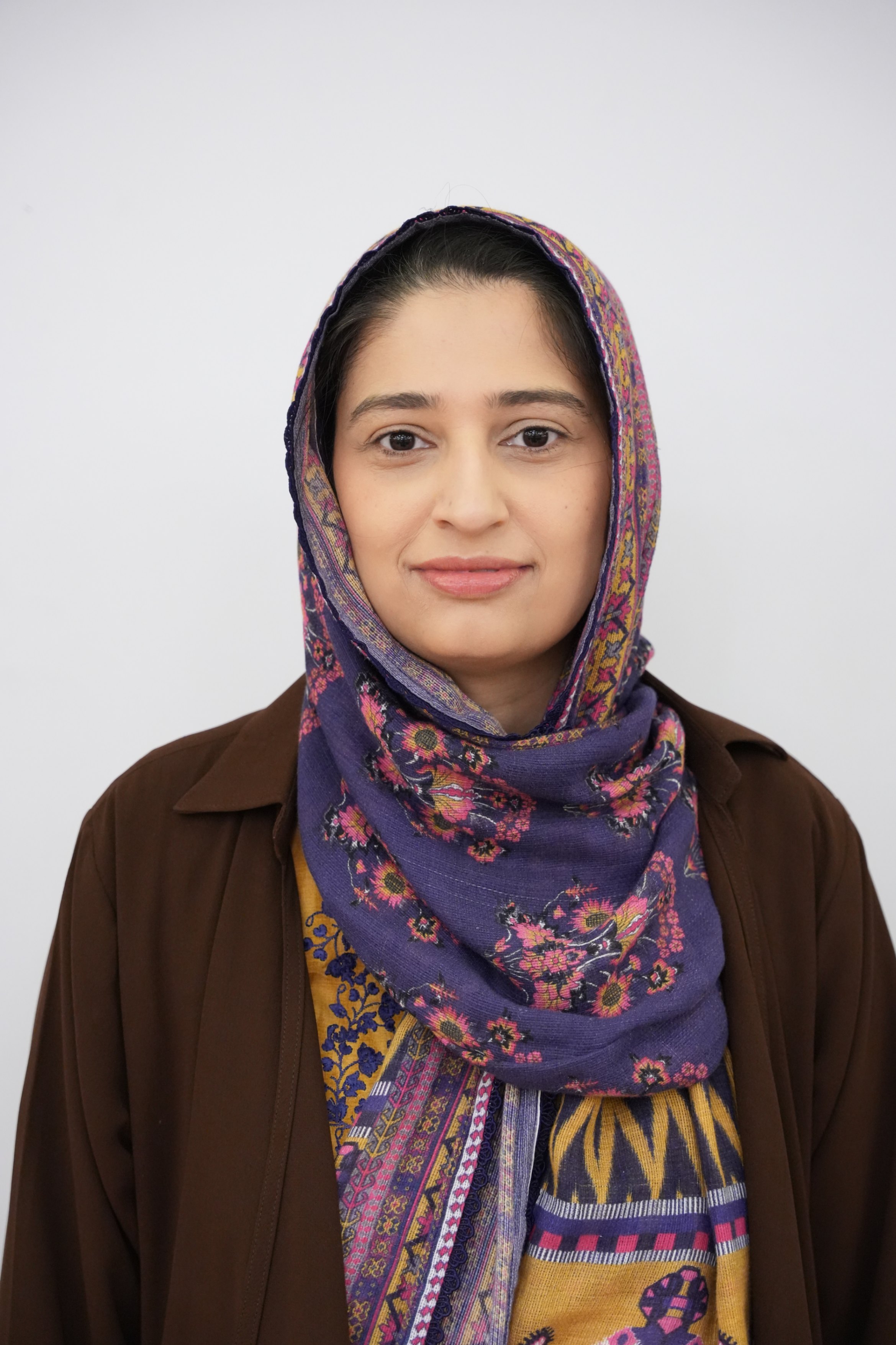
Program Manager
Foundation University School of Science and Technology
Graduates of the program are prepared for roles such as:
- Web Developer
- Mobile App Developer
- Full Stack Developer
- Data Analyst
- Applied AI / ML Technologist
- Cybersecurity Analyst / GRC / Ethical Hacker
- Network Systems Technologist
- System Administrator
- SQA Engineer
- Database Management Technologist
- UI/UX Designer
| Areas | Credit Hours | Courses |
|---|---|---|
| Domain Core | 61 | 17 |
| Mathematics Courses | 6 | 2 |
| Elective Courses | 3 | 1 |
| Technology Project | 6 | 2 |
| General Education Requirement | 29 | 13 |
| Supervised Industrial Training | 32 | 2 |
| Total | 137 | 37 |
Detailed Plan
1st Year/ Semester 1
| Sr. No. | Course Code | Course Title | Pre-Req | Domain | Credit Hours |
|---|---|---|---|---|---|
| 1 | GER-1100 | Application of Information & Communication Technologies | None | General Education | 3(2-1) |
| 2 | IET 1001 | Programming Fundamental | None | Core | 4(2-2) |
| 3 | GER-4401 | Pakistan Studies | None | General Education | 2(2-0) |
| 4 | GER-4402 | Understanding of the Holy Quran I | None | General Education | 1(1-0) |
| 5 | GER-2400 | Islamic Studies | None | General Education | 2(2-0) |
| 6 | GER-1200 | Functional English | None | General Education | 3(3-0) |
| 7 | IET 1022 | Digital Logic Design | None | Core | 3(3-0) |
| 8 | MTS 1002 | Basic Mathematics (for Pre Medical) | None | Deficiency | 0 |
| Total Cr Hrs. | 18(15-3) |
1st Year/ Semester 2
| Sr. No. | Course Code | Course Title | Pre-Req | Domain | Credit Hours |
|---|---|---|---|---|---|
| 1 | GER-2700 | Professional Practices | None | General Education | 2(2-0) |
| 2 | IET 1002 | Object Oriented Programming | PF | Core | 4(2-2) |
| 3 | GER-1304 | Calculus and Analytic Geometry | None | General Education | 3(3-0) |
| 4 | GER-2401 | Ideology and Constitution of Pakistan | None | General Education | 2(2-0) |
| 5 | IET 2053 | Computer Networking Technologies | None | Core | 3(2-1) |
| 6 | GER-2600 | Applied Physics | None | General Education | 3(2-1) |
| 7 | GER-4403 | Understanding of the Holy Quran II | Understanding of the Holy Quran I | General Education | 1(1-0) |
| Total Cr Hrs. | 18(14-4) |
2nd Year/ Semester 3
| Sr. No. | Course Code | Course Title | Pre-Req | Domain | Credit Hours |
|---|---|---|---|---|---|
| 1 | IET 2032 | Data Structures and Algorithms | OOP | Core | 4(3-1) |
| 2 | IET 1004 | Computer Architecture and Assembly Language | DLD | Core | 3(2-1) |
| 3 | GER-1305 | Probability and Statistics | Calculus and Analytical Geometry | General Education | 3(3-0) |
| 4 | GER-2800 | Entrepreneurship | None | General Education | 2(2-0) |
| 5 | GER-2402 | Civics and Community Engagement | None | General Education | 2(2-0) |
| 6 | IET 2041 | Database Systems | None | Minor | 4(3-1) |
| Total Cr Hrs. | 18(15-3) |
2nd Year/ Semester 4
| Sr. No. | Course Code | Course Title | Pre-Req | Domain | Credit Hours |
|---|---|---|---|---|---|
| 1 | IET 2013 | Mobile App Development | OOP | Core | 4(3-1) |
| 2 | IET 2052 | Introduction to Web Technologies | Database Systems | Core | 4(3-1) |
| 3 | GER-2603 | Environmental Sciences | None | General Education | 3(3-0) |
| 4 | GER-1203 | Technical Report Writing | None | General Education | 3(3-0) |
| 5 | IET 2042 | Operating System Principles | OOP | Core | 4(3-1) |
| Total Cr. Hrs. | 18(15-3) |
3rd Year/ Semester 5
| Sr. No. | Course Code | Course Title | Pre-Req | Domain | Credit Hours |
|---|---|---|---|---|---|
| 1 | IET 3071 | Software Engineering | None | Core | 3(3-0) |
| 2 | IET 2031 | Theory of Automata & Compilers | None | Core | 3(3-0) |
| 3 | IET 3001 | Technology Project Part 1 | Intro to Web Technologies/ Mobile App Development | Capstone | 3(0-3) |
| 4 | IET 3082 | Introduction to Data Science | None | Minor | 4(3-1) |
| 5 | IET 4051 | Introduction to Cyber Security | Computer Networking Technologies | Core | 4(3-1) |
| Total Cr. Hrs. | 17(12-5) |
3rd Year/ Semester 6
| Sr. No. | Course Code | Course Title | Pre-Req | Domain | Credit Hours |
|---|---|---|---|---|---|
| 1 | IET 3002 | Technology Project Part 2 | Technology Project Part 1 | Capstone | 3(0-3) |
| 2 | IET 3081 | Machine Learning | Intro to Data Science | Minor | 3(2-1) |
| 3 | IET 3061 | Organizational Behavior | None | IDE | 3(3-0) |
| 4 | IET 3011 | Visual Programming Concepts | OOP, Database Systems | Core | 4(3-1) |
| 5 | IET 3083 | Introduction to Artificial Intelligence | Intro to Data Science | Minor | 3(3-0) |
| Total Cr. Hrs. | 16(11-5) |
4th Year/ Semester 7
| Sr. No. | Course Code | Course Title | Pre-Req | Domain | Credit Hours |
|---|---|---|---|---|---|
| IET 4092 | Supervised Industrial Training-I | None | Internship | 16(0-16) | |
| Total Cr. Hrs. | 16(0-16) |
4th Year/ Semester 8
| Sr. No. | Course Code | Course Title | Pre-Req | Domain | Credit Hours |
|---|---|---|---|---|---|
| IET 4093 | Supervised Industrial Training-II | Supervised Industrial Training-I | Internship | 16(0-16) | |
| Total Cr. Hrs. | 16(0-16) |
Credit Hours
| Semester | 1st | 2nd | 3rd | 4th | 5th | 6th | 7th | 8th | Total Degree credit hours |
|---|---|---|---|---|---|---|---|---|---|
| Credit Hours | 18 | 18 | 18 | 18 | 17 | 16 | 16 | 16 | 137 |
Assessments
Students are assessed based on assignments, quizzes, projects, presentations, oral examinations, and written examinations. Students must maintain a 2.0 CGPA by the end of the degree. The distribution of marks is:
- Sessional (Assignments, Quizzes, Projects, and Presentations) = 25%
- Midterm Exam = 25%
- Final Term Exam = 50%
- Minimum 50% marks in Intermediate (HSSC) or equivalent like F.Sc. / ICS / DAE / B.Sc. (Excluding sports and Hafiz-e-Quran) with Mathematics as a subject.
- 50% Score in Entry Test
- Pre-Medical students? admission in B.E.Tech. (Information) is allowed however they must pass deficiency courses of Mathematics of 6 credit hours within one year of their regular studies.
The B.E. Tech. (Information) program offers a comprehensive curriculum designed to equip students with both theoretical foundations and practical expertise in information engineering technologies.
Core Courses:
- Programming Fundamental
- Digital Logic Design
- Object-Oriented Programming
- Computer Networking Technologies
- Data Structures and Algorithms
- Computer Architecture and Assembly Language
- Mobile Application Development
- Introduction to Web Development
- Operating System Principles
- Software Engineering
- Theory of Automata & Compilers
- Introduction to Cybersecurity
- Visual Programming
Specialized Courses:
- Database Systems
- Introduction to Data Science
- Machine Learning
- Introduction to Artificial Intelligence
Technology Project:
Students integrate their technical, analytical, and project management skills to design, develop, and deliver a real-world software solution that addresses practical industry or research challenges.
Supervised Industrial Training:
Most distinguished part of this degree program that spans the 7th and 8th semesters in which 100% students are placed in leading IT industries for minimum 32 weeks where they gain hands-on experience on trending technologies.
Why Study Information Engineering Technology?
Studying Information Engineering Technology empowers the students to become technologists who build and maintain the core systems, and technologies that power the digital world. The program builds strong foundations in programming, system design, and problem-solving focusing on teamwork, innovation, ethics, and community engagement.
A standout feature is the full academic year in industry, providing essential hands-on experience to solve real-world technical challenges. Graduates are prepared for diverse careers as software/mobile/web developers, data analysts, cybersecurity professionals, SQA engineers and many others. This degree combines technical expertise with professional practice, opening pathways to global opportunities and leadership in the evolving technology landscape.
Program Education Objectives (PEOs)
| Objective | Description |
|---|---|
| PEO1: Professional excellence | Graduates will apply IT and engineering technological knowledge to design, develop, and maintain sustainable innovative information systems that optimize organizational efficiency. |
| PEO2: Innovation and Entrepreneurship |
Graduates will engage in research, innovation, and entrepreneurial ventures to develop sustainable digital solutions that contribute to socio-economic growth. |
| PEO3: Ethical and Global Impact | Graduates will demonstrate professional ethics, societal responsibility, and effective communication and leadership skills to collaborate in multidisciplinary teams to be a part of global technological advancement. |
Program Learning Outcomes
Upon successful completion of the Bachelor of Engineering Technology in Information program, graduates will demonstrate the following Program Learning Outcomes (PLOs):
| S# | PLO’S | Description |
|---|---|---|
| 1 | Engineering Technology Knowledge (SA1): | An ability to apply knowledge of mathematics, natural science, Engineering Technology fundamentals and Engineering Technology specialization to defined and applied Engineering Technology procedures, processes, systems or methodologies. |
| 2 | Problem Analysis (SA2): | An ability to Identify, formulate, research literature and analyse broadly-defined Engineering Technology problems reaching substantiated conclusions using analytical tools appropriate to the discipline or area of specialization. |
| 3 | Design/Development of Solutions (SA3): | An ability to design solutions for broadly-defined Engineering Technology problems and contribute to the design of systems, components or processes to meet specified needs with appropriate consideration for public health and safety, cultural, societal, and environmental considerations. |
| 4 | Investigation (SA4): | An ability to conduct investigations of broadly-defined problems; locate, search and select relevant data from codes, data bases and literature, design and conduct experiments to provide valid conclusions. |
| 5 | Modern Tool Usage (SA5): | An ability to Select and apply appropriate techniques, resources, and modern technology and IT tools, including prediction and modelling, to broadly-defined Engineering Technology problems, with an understanding of the limitations. |
| 6 | The Engineering Technologist and Society (SA6): | An ability to demonstrate understanding of the societal, health, safety, legal and cultural issues and the consequent responsibilities relevant to Engineering Technology practice and solutions to broadly defined Engineering Technology problems. |
| 7 | Environment and Sustainability (SA7): | An ability to understand and evaluate the sustainability and impact of Engineering Technology work in the solution of broadly defined Engineering Technology problems in societal and environmental contexts. |
| 8 | Ethics (SA8): | Understand and commit to professional ethics and responsibilities and norms of Engineering Technology practice. |
| 9 | Individual and Team Work (SA9): | An ability to Function effectively as an individual, and as a member or leader in diverse teams. |
| 10 | Communication (SA10): | An ability to communicate effectively on broadly defined Engineering Technology activities with the Engineering Technologist community and with society at large, by being able to comprehend and write effective reports and design documentation, make effective presentations, and give and receive clear instructions. |
| 11 | Project Management (SA11): | An ability to demonstrate knowledge and understanding of Engineering Technology management principles and apply these to one’s own work, as a member or leader in a team and to manage projects in multidisciplinary environments. |
| 12 | Lifelong Learning (SA12): | An ability to recognize the need for, and have the ability to engage in independent and life-long learning in specialist Engineering Technologies. |
Mission Statement
To produce skilled information engineering technologists capable of applying engineering and technology principles to design and develop innovative information systems by fostering research, collaboration, innovation-driven initiatives, professional ethics, and community engagement, thereby creating global socio-economic impact.
Program Highlights
- Comprehensive Curriculum: Gain a strong foundation in programming, algorithms, database systems, software engineering, and computer networks.
- Emerging Technologies: Explore advanced areas such as artificial intelligence, data science, cloud computing, and cybersecurity.
- Practical Learning: Apply theoretical knowledge through hands-on labs, software development projects, and industry-driven assignments.
- Career Readiness: Develop technical, analytical, and communication skills to excel in diverse IT and software development roles.
- Research & Innovation: Engage in research and final-year projects that address real-world computing challenges and emerging technological trends.
Who Should Apply?
This program is ideal for individuals who:
- Are passionate about designing and building reliable, efficient, and user-centered software systems.
- Wish to develop strong programming, analytical, and software design skills.
- Aspire to pursue careers in information technology, software development, quality assurance, cybersecurity or emerging technology fields.
- Are eager to contribute to digital innovation and play a key role in transforming ideas into impactful software solutions.